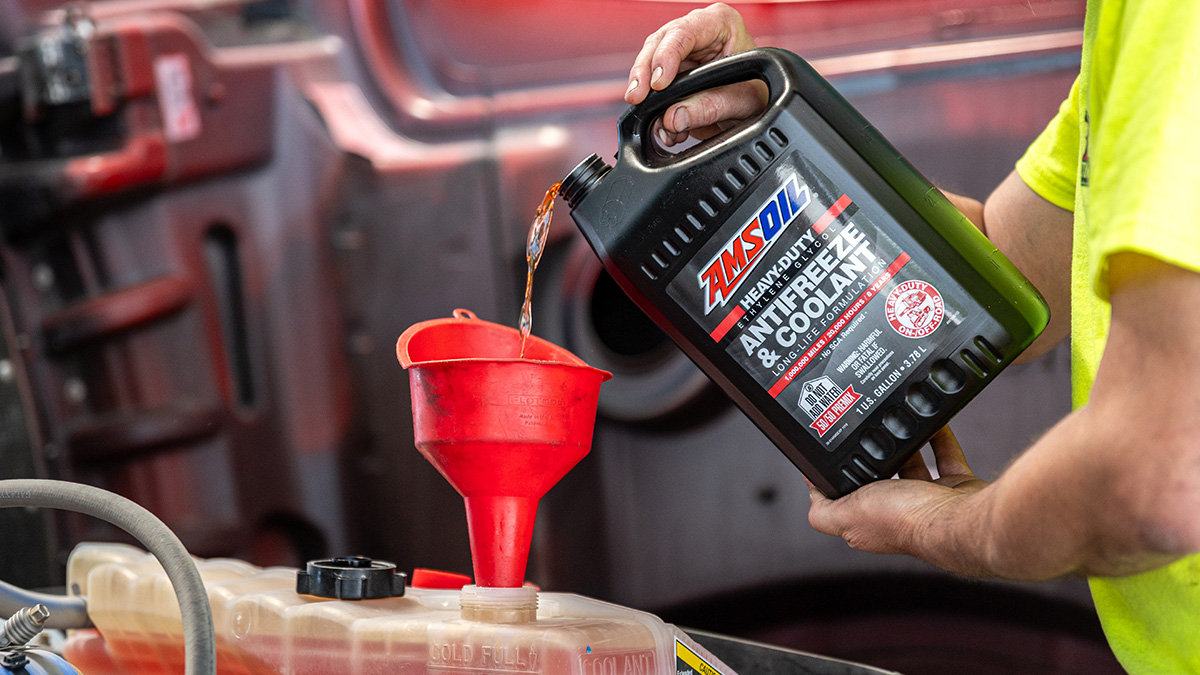
A vehicle’s engine generates enough heat to destroy itself, and it is up to the cooling system to keep the engine within a safe operating temperature range. Preventive maintenance, including fluid maintenance, is essential to extending radiator and engine life and keeping them in top working order.
Coolant’s important role
Besides aiding engine-temperature regulation, a quality coolant will also protect against:
- Corrosion that damages metal components.
- Scaling that interferes with heat transfer.
- Cavitation and pitting that damage cylinder liners (heavy-duty applications).
Coolant consists of a base (typically ethylene glycol or propylene glycol) mixed with additives and water. The base is primarily responsible for keeping the engine from turning into a block of ice in winter and a geyser in summer. Mixing water with coolant raises boil-over protection to around 265°F (129°C) and freeze protection to around -34°F (-37°C). The additives guard against corrosion, cavitation and scaling, while water effectively removes heat from the engine.
Coolant neglect
Coolant-system issues account for about 40% of engine problems, often due to motorists neglecting to maintain their coolant. It’s easy to see why – coolant is a long-drain-interval product. With service intervals of around five years (and longer in heavy-duty applications), it’s not top-of-mind. Compare that to engine oil, which is changed at least yearly and sometimes more often.
Coolant neglect leads to all kinds of problems, particularly if using inexpensive conventional green coolants found at almost every retailer. For example, corrosion occurs when an imbalanced coolant chemically reacts with metallic surfaces, forming reddish deposits that can appear as sludge or slime. Fouling can occur from contamination of the cooling system by microorganisms that create sludge and fouled surfaces with byproducts of rust or corrosion. As coolants age, the chemical protection of the metal surfaces breaks down and sludge accumulates.
OAT and HOAT
The additives in green coolants use inorganic-acid technology (IAT), which relies exclusively on inorganic salts such as nitrites, phosphates and silicates for protection. Formulating exclusively with inorganic salts has drawbacks. They deplete rather quickly and can lead to scale buildup and sludge if maintenance is neglected.
One solution is to formulate the coolant using organic-acid technology (OAT). These coolants don’t contain phosphates, silicates or other inorganic salts, virtually eliminating problems associated with conventional green coolants. They also last longer.
Another solution is hybrid organic-acid technology (HOAT). These coolants rely heavily on organic acids, but strategically use some inorganic salts to take advantage of their protective properties. A properly formulated HOAT coolant delivers long service life and excellent protection.
SCAs
Heavy-duty diesel operators often use supplemental coolant additives (SCAs). They’re designed to be added to the coolant about halfway through the service interval, replenishing the additives that have depleted. However, the operator must test the coolant using test strips and match the color of the strip to a chart. The risk is adding too much SCA, which can cause additive “dropout.” This occurs when the additives separate from the coolant base and form sludge and slime that plug coolant passages. Too much SCA can also lead to scale buildup, which inhibits heat transfer.
Fortunately, there’s a better way. You can use a high-quality coolant that doesn’t require the hassle of SCAs and does a better job of fighting common problems like scale, sludge and slime.
AMSOIL coolants
Premium AMSOIL coolants provide outstanding cooling-system protection, delivering superior heat transfer and excellent protection against corrosion, freezing and boil-over. They are compatible with all other coolant colors and all plastics and elastomers (hoses, gaskets, etc.) found in cooling systems, and they provide superior protection for aluminum, steel, cast iron, copper, brass and solder alloys.
- Proprietary HOAT formulation delivers maximum cooling-system protection in extreme temperatures and operating conditions.
- Protection up to 150,000 miles (241,000 km) or 5 years, whichever comes first, in passenger cars and light trucks.
- Protection up to 1,000,000 miles (1,609,344 km), 20,000 hours or 8 years, whichever comes first, in heavy-duty and off-road applications.
- Fully formulated: DOES NOT require the use of SCAs or extenders.
- Phosphate-, nitrate-, nitrite-, silicate-, borate- and amine-free.
- Boil-over protection up to 265°F (129°C) with a 15-psi radiator cap.
- Freeze protection down to -34°F (-37°C).
Requires mixing with distilled or high-quality water.
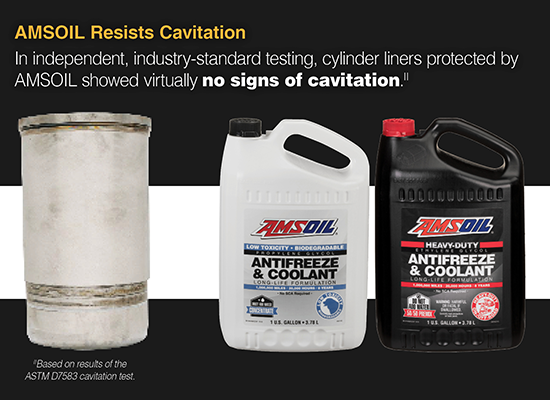
- Proprietary HOAT formulation is further enhanced with anti-scalant, anti-fouling and water-pump lubrication additives.
- Protection up to 1,000,000 miles (1,609,344 km), 20,000 hours or 8 years, whichever comes first, in heavy-duty and off-road applications.
- Fully formulated: DOES NOT require the use of SCAs or extenders.
- Phosphate-, nitrate-, nitrite-, silicate-, borate and amine-free.
- Boil-over protection up to 265°F (129°C) with a 15-psi radiator cap.
- Freeze protection down to -34°F (-37°C).
- Pre-mixed 50/50 with high-purity water.
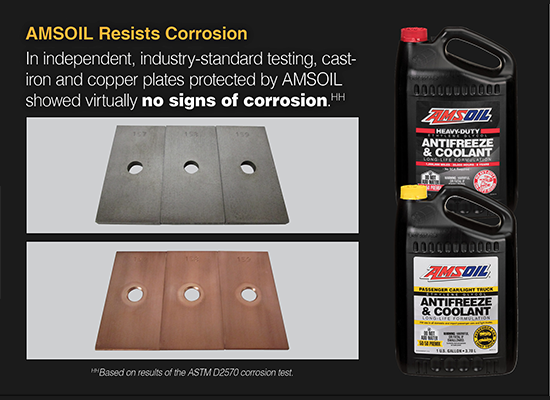
- Unique OAT formulation imparts multi-vehicle application.
- Protection up to 150,000 miles (241,000 km) or 5 years, whichever comes first, in passenger cars and light trucks.
- Engineered to exceed original equipment manufacturer (OEM) requirements.
- Phosphate-, nitrate-, nitrite-, silicate-, borate- and amine-free.
- Boil-over protection up to 265°F (129°C) with a 15-psi radiator cap.
- Freeze protection down to -34°F (-37°C).
- Pre-mixed 50/50 with high-purity water.
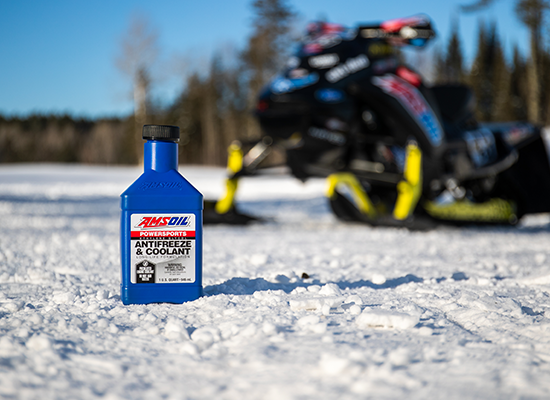
- Optimized for powersports cooling systems.
- Ethylene-glycol formulation meets OEM requirements.
- Extended-life formulation lasts up to five years.
- Borate-, nitrite- and phosphate-free.
- Safe for copper, brass/bronze alloys and aluminum.
- Boil-over protection up to 226°F (108°C).
- Freeze protection down to -34°F (-37°C).
- Pre-mixed 50/50 with high-purity water.


by Brad Nelson
Brad Nelson is a staff writer for AMSOIL. Outside of work he enjoys family adventures, wilderness exploration and riding/wrenching on vintage metric motorcycles.