
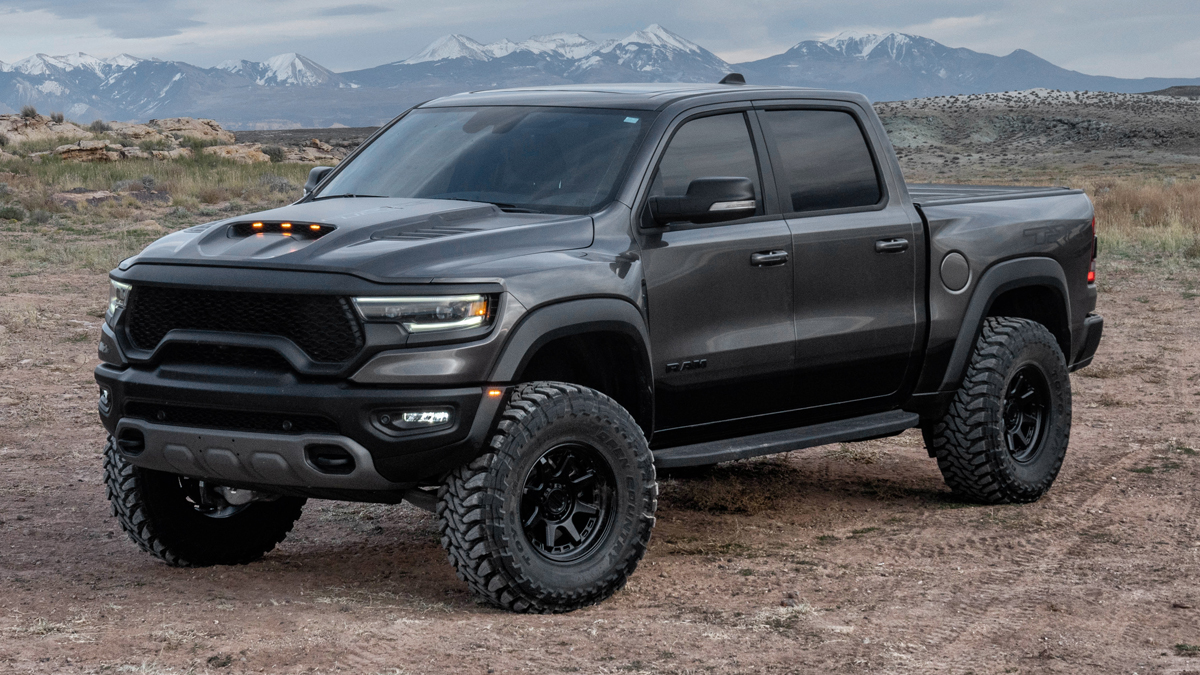
Whether navigating snow-covered roads or tackling rugged trails, four-wheel-drive (4WD) and all-wheel-drive (AWD) vehicles rely on a critical component to deliver power where it’s needed most. That mechanical hero is the transfer case, and protecting it is essential for your vehicle’s long-term performance and longevity. We explore the fundamentals of the transfer case below, from its core function and different types to its operational modes and lubricant requirements.
What is it?
Drive mode distributes engine power to all four wheels, roughly doubling traction for improved acceleration and maintaining movement through low-grip conditions like mud, snow or sand. The transfer case is used in both four-wheel and all-wheel-drive systems to divide the torque output from the transmission between the front and rear axles, directly to the rear of the transmission and use a system of gears or chains to power output shafts that connect the vehicle’s front and rear drive axles. In 4WD vehicles, putting the vehicle into four-high or four-low typically sends power to the front axle. AWD vehicles are commonly front-wheel drives, so the transfer case usually sends power to the rear wheels when engaged.
A transfer case can be gear-driven or chain-driven. Gear-driven designs are more durable and are usually used on large truck applications. Chain-driven transfer cases are lighter and operate more quietly; they are usually installed on compact and full-size trucks and SUVs.
Automatic transfer cases
Transfer cases can be operated with a selector lever or electronically controlled with a push button or dial on the dashboard. Both styles allow the operator to choose between two-wheel and four-wheel-drive modes. Some transfer cases also include high or low four-wheel-drive gear ratios (4WH or 4WL).
Full-time transfer-case units remain in four-wheel drive until the vehicle reaches a predetermined cruising speed, such as 30 mph (48 kph), at which point they change to two-wheel drive for safer handling.
Vehicles with a 2WD/4WD selector lever operate differently from those equipped with a full-time transfer-case unit. In two-wheel-high (2H) mode, only the rear axle is driven. During the four-wheel-high (4H) mode, the transfer case divides torque to both the front and rear drive axles and allows the axles to rotate at different speeds.
In the low-gear mode (2L/4L), the transfer case engages a second set of reduction gears that lock the axles together, forcing them to rotate at the same speed. This mode, while not ideal for driving on a dry road, is well-suited for off-road conditions with steep grades, uneven terrain and low traction conditions.
Manual transfer-case operation
The ability to change drive mode, from 4H to 2H for example, varies depending on transfer-case design. The internal components of the transfer case responsible for changing the mode dictate most of the fluid-property requirements for the unit.
For a four-wheel-drive vehicle with a manual transfer case, engaging and disengaging the front axle requires the vehicle to decelerate. Many truck manufacturers advise shifting the transfer-case gears below speeds of 3 mph (5 kph).
Automatic transfer-case units are more common on newer vehicles and can be operated at faster speeds. They are electronically actuated and use clutches to transfer rotation to the drive shaft.
Protecting your transfer case
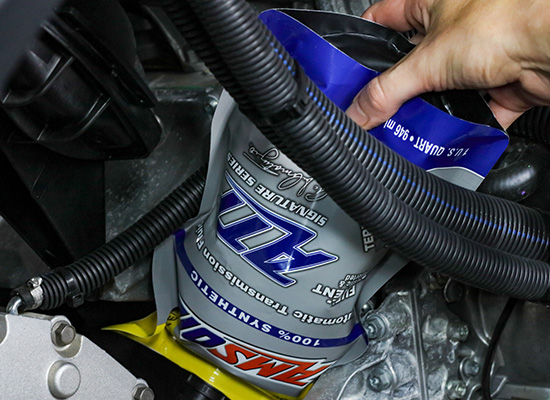
Protecting the complex set of gears and chains inside your transfer case is essential for the long-term reliability and performance of your 4WD or AWD system. The gears and chains in the transfer case endure substantial mechanical stress during extreme use like towing, hauling or tackling off-road terrain. Shift-on-the-fly automatic transfer-case units use a synchromesh unit that has specific additive requirements for friction and copper-corrosion protection.
The lubricant you install must withstand extreme pressure and heat, guard against wear and maximize performance. It must provide adequate film strength to prevent metal-to-metal contact between gears and other critical components. Robust protection significantly reduces wear, extending the life of your transfer case.
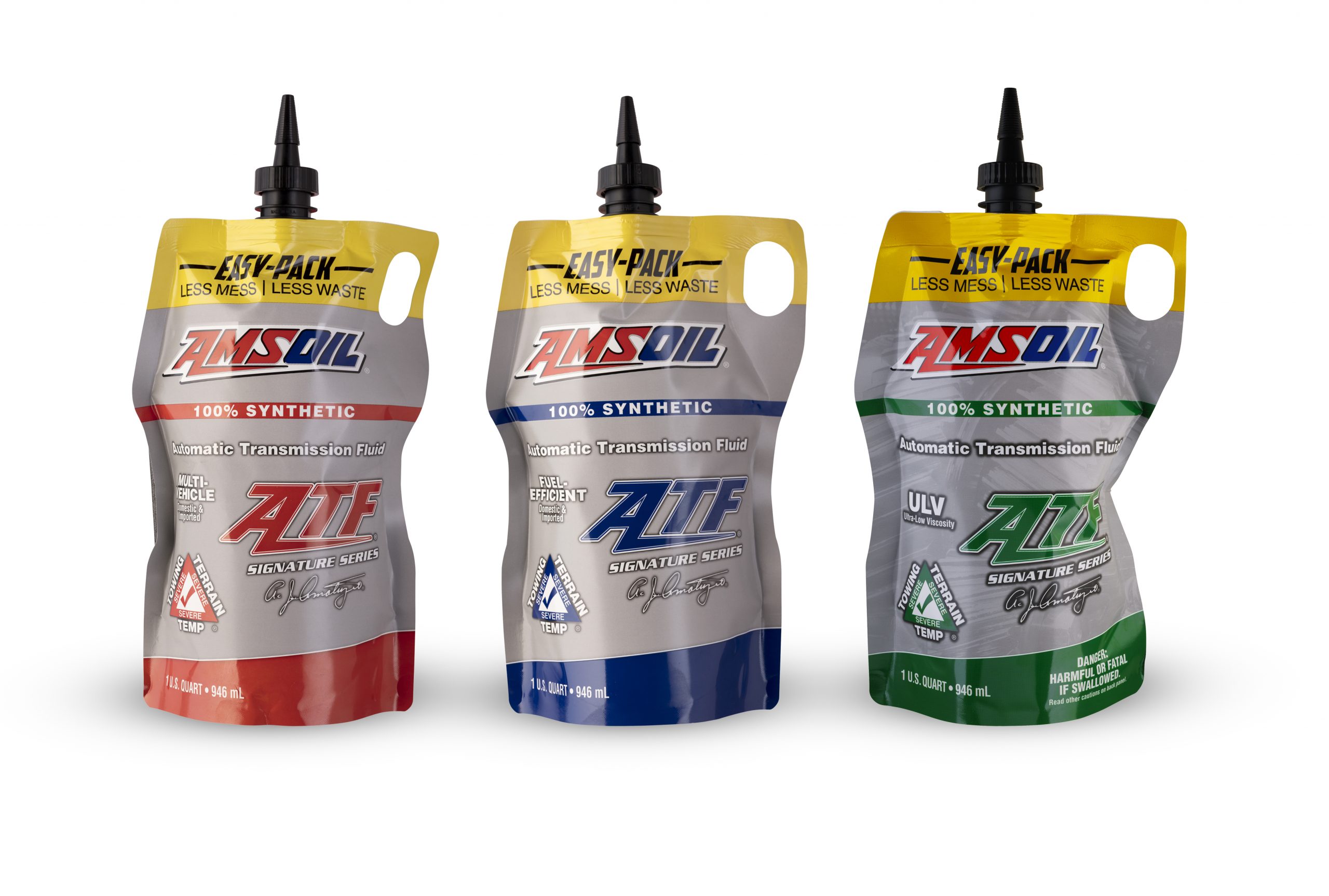
AMSOIL products offer exceptional thermal stability, resisting breakdown and maintaining viscosity even under the most severe operating conditions. For example, AMSOIL Signature Series 100% Synthetic Automatic Transmission Fluid is engineered to withstand the rigors of heavy towing, elevated temperatures and challenging terrain with high film strength and premium anti-wear/extreme-pressure additives to help prevent wear. Signature Series remains fluid in sub-zero temperatures and is heat resistant with high concentrations of antioxidants. To find the correct AMSOIL product for your vehicle, use the Find the Right Oil tool at AMSOIL.com.cy.
Reliability for miles
The transfer case is a fundamental component of any 4WD or AWD system, responsible for the critical task of distributing engine torque to the front and rear axles. Its complex system of gears, chains and clutches enables your vehicle to gain the traction needed to navigate everything from slick roads to steep climbs. Proper maintenance is essential for ensuring the long-term health and reliability of this vital drivetrain component. AMSOIL offers a complete line of products designed to help you keep your transfer case operating in peak form. They withstand extreme pressures, maintain viscosity in high heat and guard against wear to help extend the life of your transfer case. By installing a premium fluid designed for your specific application, you can be confident that your transfer case is equipped to deliver reliable performance for many miles and adventures to come.

by Brad Nelson
Brad Nelson is a staff writer for AMSOIL. Outside of work he enjoys family adventures, wilderness exploration and riding/wrenching on vintage metric motorcycles.