
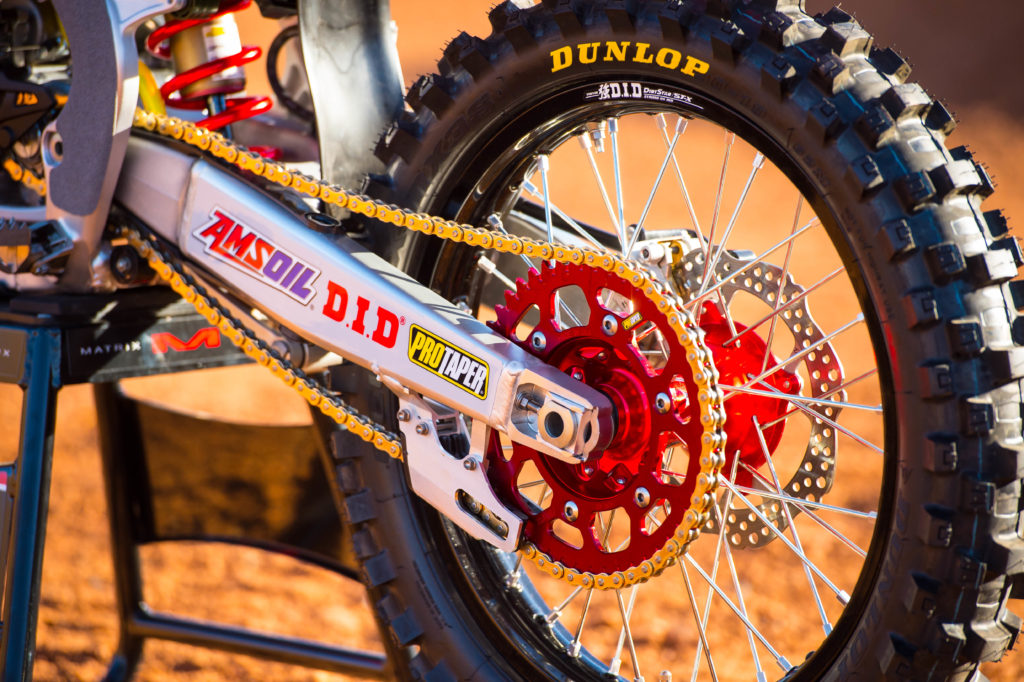
How often you should apply dirt bike chain lube depends on several factors, including your riding frequency, environmental conditions and the chain type. Wherever you fall on the spectrum, follow these simple guidelines for maintaining your dirt bike chain.
- Lube the chain prior to each ride or race.
- Lube the chain after every wash.
- Clean the chain before lubricating to prolong its life.
O-ring and X-ring dirt bike chains
O-ring chains have tiny rubber O-rings between the inner and outer side plates help prevent dirt and other abrasives from infiltrating the chain pivot points and scouring away the metal. The rings are literally in the shape of an “O” and distort to flatten on two sides when compressed, creating a seal that keeps the lubricant in and the contaminants out.
An X-ring chain is designed similarly, except the tiny rubber seals are in the shape of an “X”. When compressed between the plates, two smaller faces seal against the plate. This configuration provides the same great sealing action, with reduced friction that helps transfer more power to the ground. As such, X-ring chains are typically more expensive.
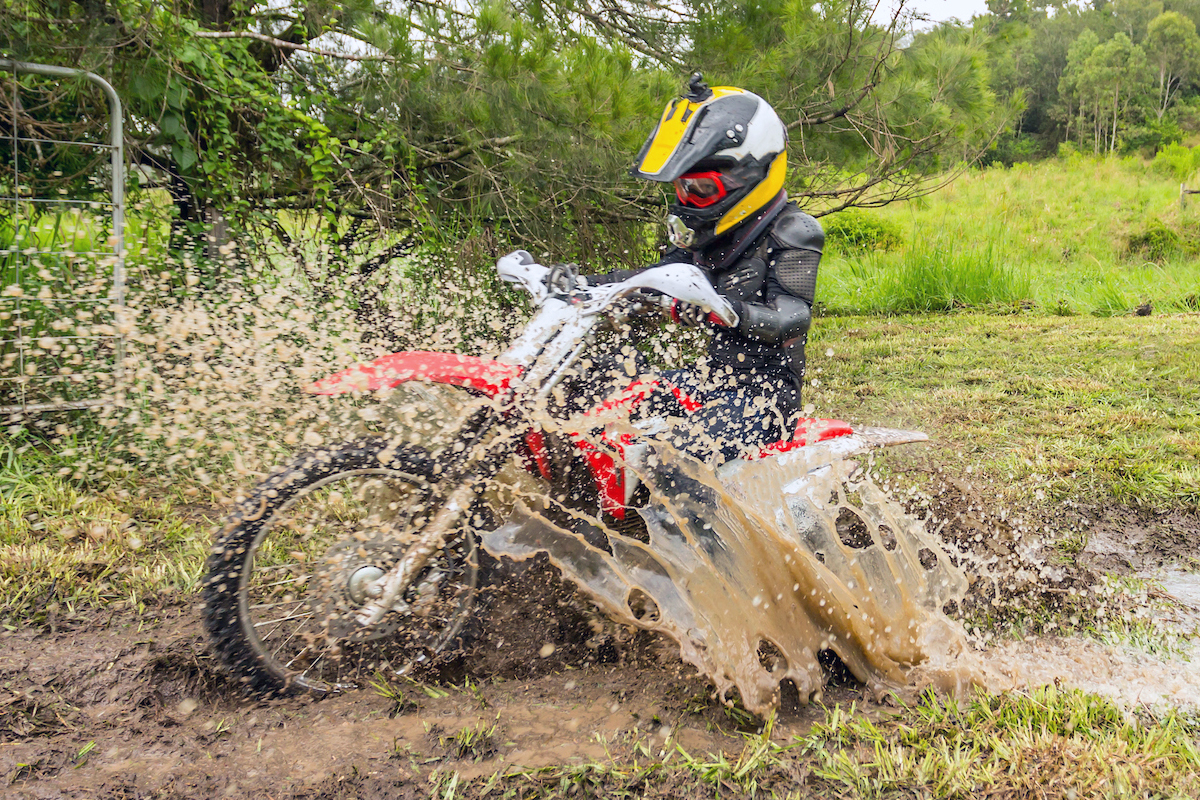
O-ring and X-ring chains are great when trail riding through mud and water. However, despite lubricant being sealed inside the pins, the rollers side plates and other components on O-ring and X-ring chains still require lubrication to prevent corrosion.
Unsealed-linkage chains
Motocross racers often choose non-O-ring or X-ring chains because they’re lighter, which helps maximizes the power-to-weight ratio.
However, the added power comes at the expense of chain protection. Dirt and abrasives are free to migrate into every nook and cranny in standard chains, so cleaning and lubricating needs to be done more often.
Cleaning dirt bike chains
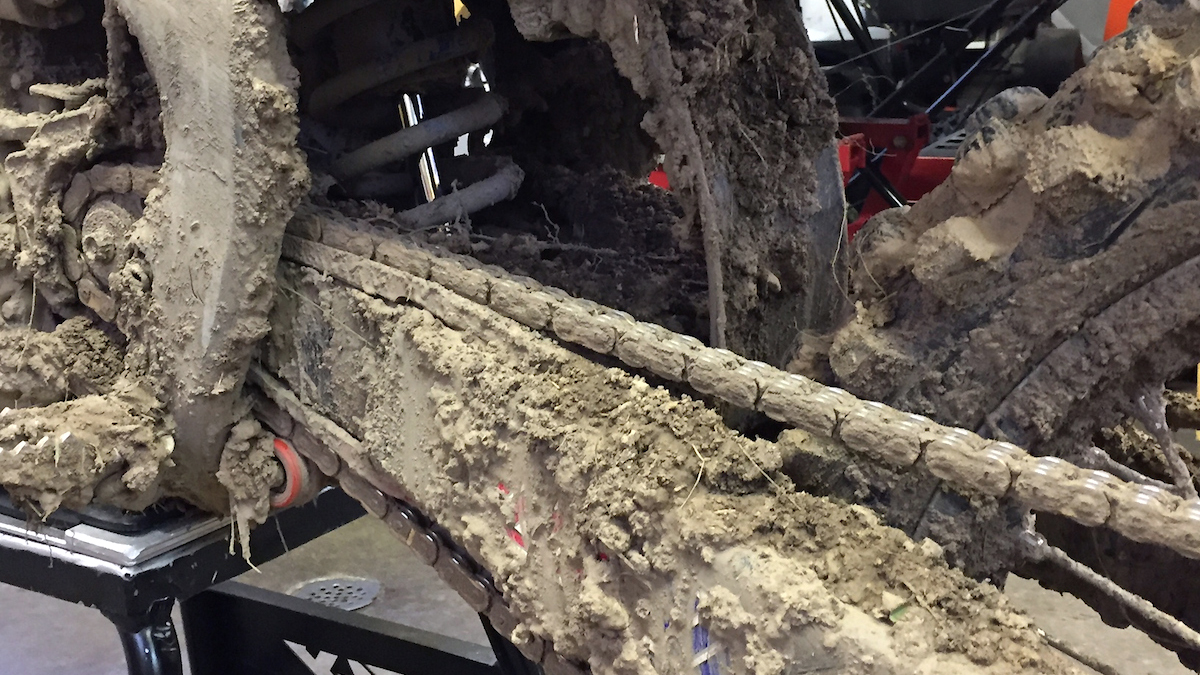
Getting dirty is the name of the game. That means your chain gets dirty, too. Cleaning your chain periodically can significantly increase its life and save you time and money.
- Use a soft-bristled brush to work loose any heavy buildup.
- Use non-abrasive dish detergent to wash the chain.
- Dry the chain using compressed air or a clean rag.
- Spray the chain with AMSOIL MP to displace water.
- Apply AMSOIL Chain Lube to prevent corrosion.
If using a pressure washer, take care not to direct intense high-pressure streams directly to O-ring or X-ring chains because it can ruin the seals
Preventative maintenance
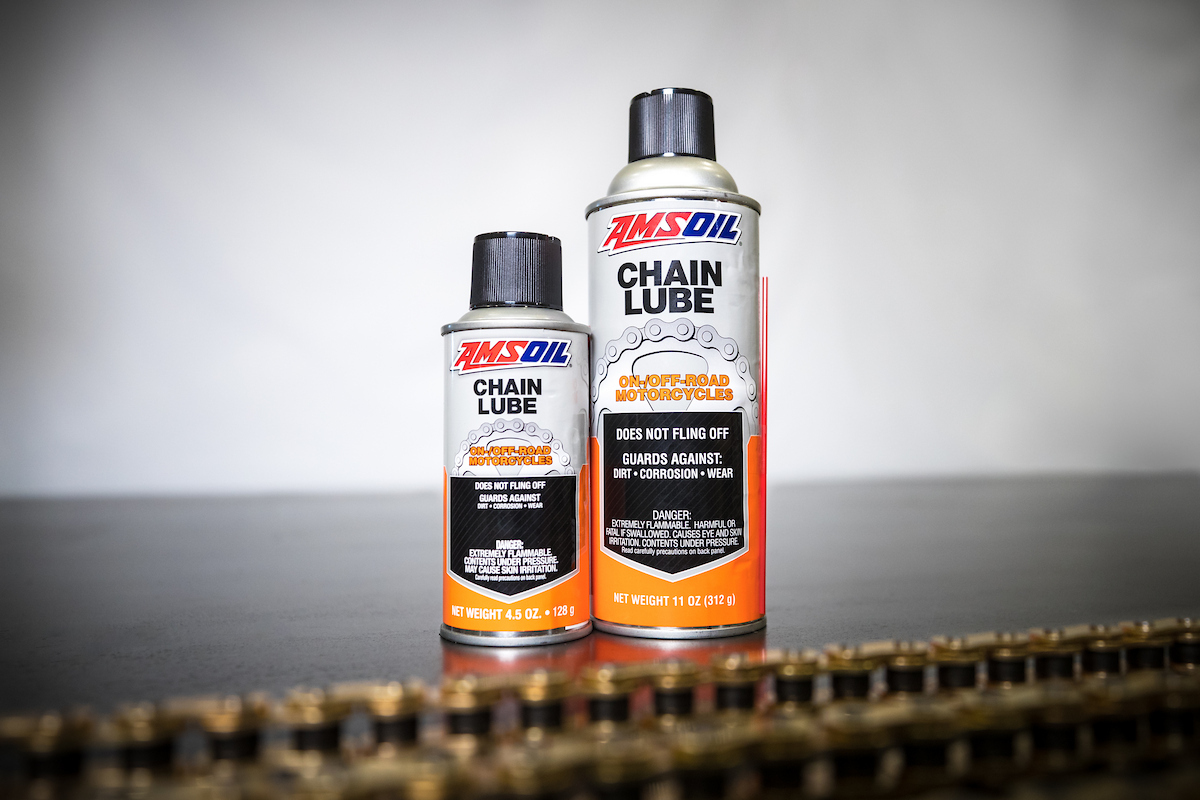
AMSOIL Chain Lube is designed to repel dirt and should be applied before each day of trail riding and prior to every race following the chain manufacturer’s recommendations. For additional preventative maintenance, use AMSOIL Mudslinger before riding to create a protective non-stick layer of armor that inhibits the accumulation of mud and dirt and makes it easy to clean your bike with a standard garden hose.

AMSOIL Technical Writer and 20-year veteran of the motorcycle industry. Enjoys tearing things apart to figure out how they work. If it can’t be repaired, it’s not worth owning.